

 Posted by
 This noticable mini review was published in the last year but worth not to overlook as it is in line with the posts of the last two days.
Parkinson’s disease (PD) is a predominantly idiopathic pathological condition characterized by protein aggregation phenomena, whose main component is alpha-synuclein. Although the main risk factor is ageing, numerous evidence points to the role of type 2 diabetes mellitus (T2DM) as an etiological factor. Systemic alterations classically associated with T2DM like insulin resistance and hyperglycemia modify biological processes such as autophagy and mitochondrial homeostasis. High glucose levels also compromise protein stability through the formation of advanced glycation end products, promoting protein aggregation processes. The ability of antidiabetic drugs to act on pathways impaired in both T2DM and PD suggests that they may represent a useful tool to counteract the neurodegeneration process. Several clinical studies now in advanced stages are looking for confirmation in this regard.
The review covers the following topics:
- 2. Protein aggregation as a two-way connection
- 3. Insulin resistance and the impairment of autophagic processes
- 4. Hyperglycemia compromises cellular proteostasis
- 5. Mitochondrial dysfunction as a fatal consequence
- 6. Autophagy and hyperglycemia as new drug targets
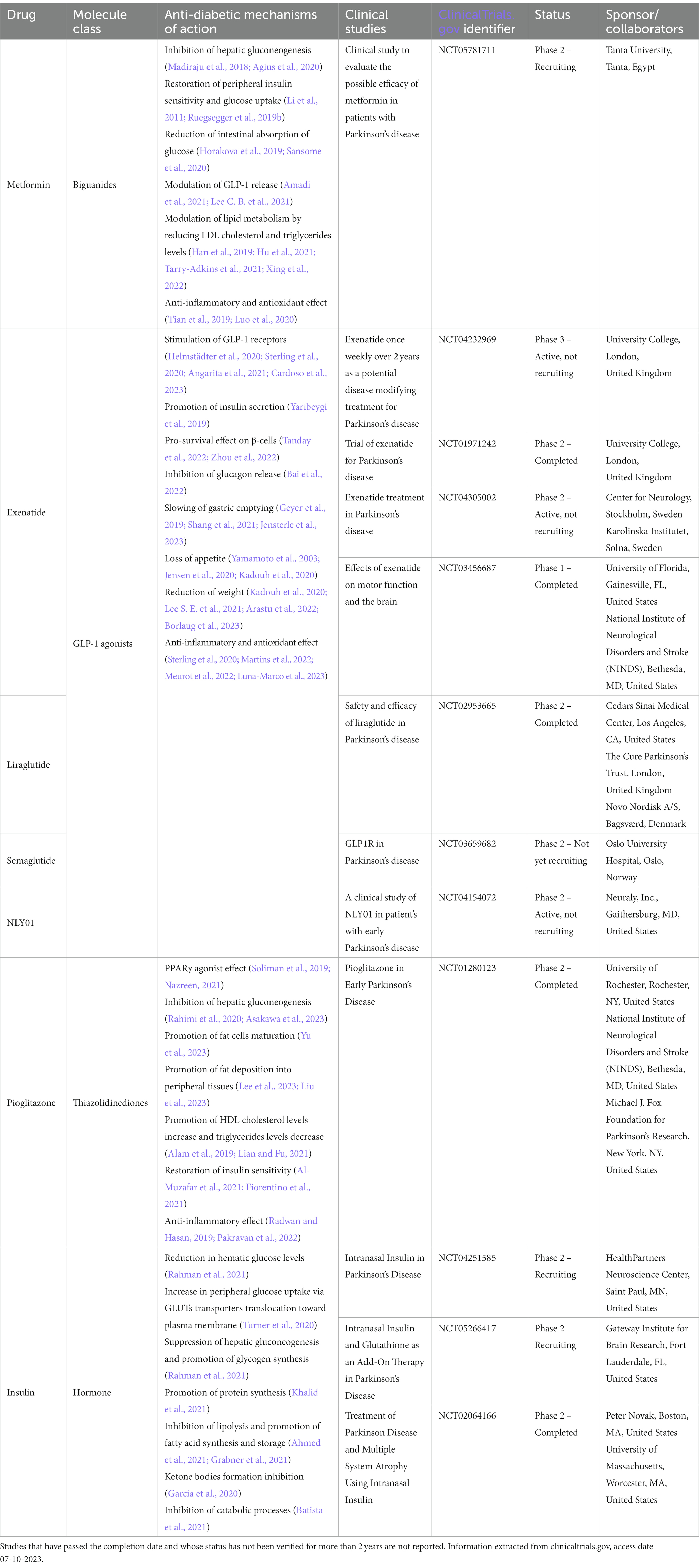
Clinical trials are going on with metformin, exanatide, liraglutide, GLP-1%, NLY01, pioglitazone and intanasal insulin (see the details in Table 5)
Knowing the beneficial effects of alpha-CD on diabetes it should be considered for the treatment of Parkinson’s disease, too.
Greco Marco , Munir Anas , Musarò Debora , Coppola Chiara , Maffia Michele (2023) Restoring autophagic function: a case for type 2 diabetes mellitus drug repurposing in Parkinson’s disease. Frontiers in Neuroscience 17, DOI=10.3389/fnins.2023.1244022